Aerial roof inspection
Drone Roof Inspection Versus a Robotic Scan
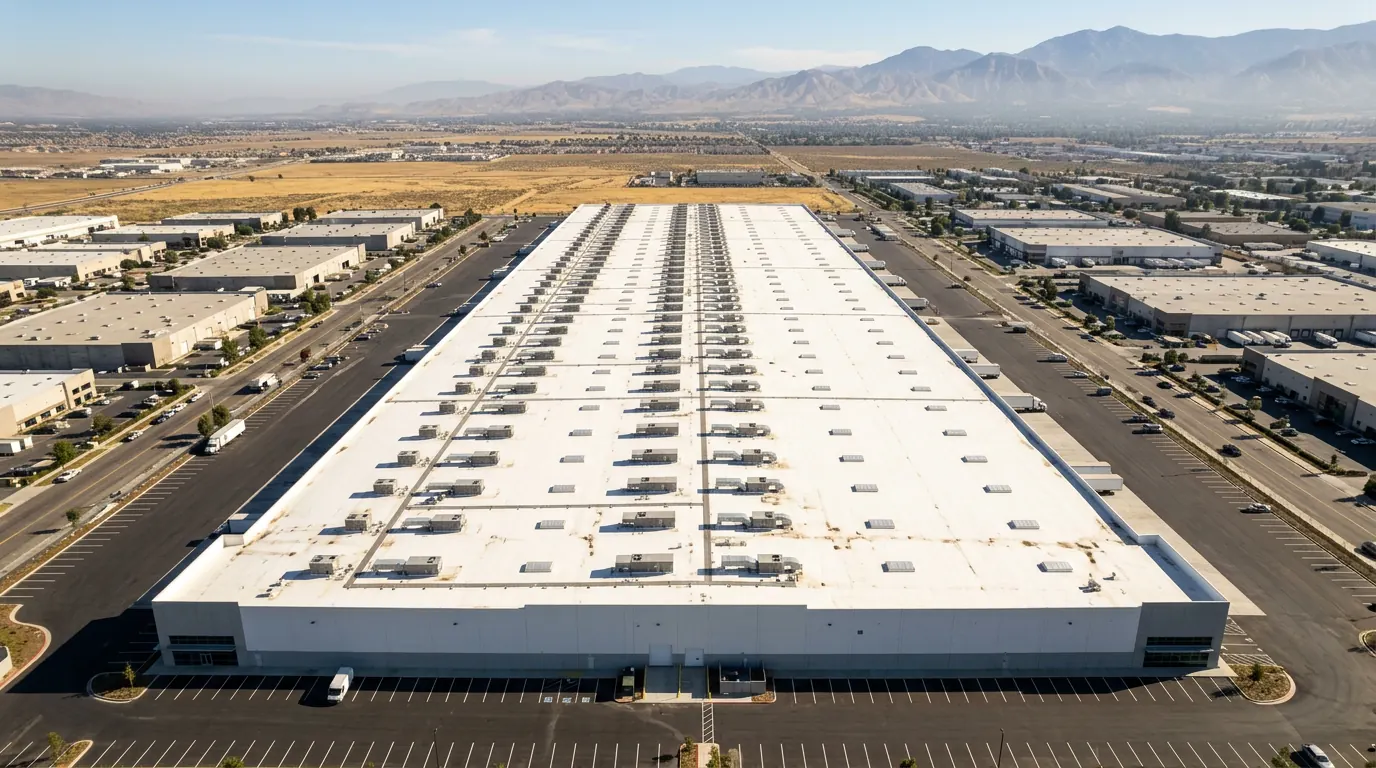
A drone photographs the surface of a commercial roof, and a robotic scan reads below it.
Both are useful, and they answer different questions. This page explains which question each one answers.
What does a commercial drone roof inspection do well?
A commercial drone roof inspection captures detailed aerial images of the whole roof surface quickly and safely, which makes it excellent for documenting visible conditions, measuring roof areas and reaching roofs that are hard to access.
- Fast coverage of very large or multiple roofs.
- No one has to walk a steep, fragile or damaged roof to see it.
- High-resolution photos and stitched aerial maps for records and measurements.
- Useful after storms, to see debris and visible damage before anyone goes up.
- Thermal payloads can flag surface temperature differences, in the right conditions.
An aerial roof inspection is a legitimate, valuable tool. Many owners use drone imagery for records, and insurers increasingly use aerial imagery too.
What does a robotic scan read that a drone cannot?
A robotic scan reads the roof assembly below the membrane, locating trapped moisture and concealed deficiencies that do not appear on the surface and therefore cannot be seen in a photograph.
Water that has passed the membrane spreads through the insulation while the surface above looks unchanged. A camera, however sharp, records the surface. Our scan travels the roof and reads what is beneath it, then maps the result.
That is why our report can include a Moisture Map with the size and boundary of each wet area. It is the finding that most often decides whether a roof is repaired, restored or replaced. Details are on our roof moisture survey page.
How do drone and robotic roof inspections compare side by side?
Side by side, a drone roof inspection is strongest for fast visual documentation of the surface, and a robotic scan is strongest for measuring moisture and hidden deficiencies below it.
| Factor | Drone inspection | Our robotic scan |
|---|---|---|
| What it sees | The roof surface from above, in photos and aerial maps. Thermal models add surface temperature. | The roof assembly below the membrane, plus the surface conditions our inspector records. |
| What it can miss | Moisture and defects that do not show on the surface. | Wide aerial context of the site, which a drone captures quickly. |
| Best conditions | Clear weather within flight rules. Thermal work needs specific timing. | A dry roof in normal daytime conditions. |
| What it produces | Photos, stitched maps and measurements. | A PE-stamped report with Moisture Map, Deficiency Map, Roof Condition Score, Remaining Service Life, and 3D and AutoCAD plans. |
| Best used for | Surface records, measurements, post-storm triage, hard-to-reach roofs. | Condition decisions, repair scopes, capital planning. |
Is a drone better than a manual roof inspection?
A drone is better than a manual roof inspection for speed and safe visual coverage, while a manual inspection is better for close examination of seams, flashings and penetrations; neither reads below the membrane.
The drone versus manual roof inspection question usually comes down to access and detail. A drone sees everything at once. An inspector on the roof can press a seam, check a clamping ring and look under a curb flashing.
Our inspection pairs the inspector on the roof with the robotic scan, so the report covers close detail and the layers underneath.
Should you use a drone, a robotic scan, or both?
Use a drone when you need fast surface imagery, use a robotic scan when you need to know the condition of the roof assembly and plan spending, and use both when a portfolio benefits from aerial records alongside measured condition data.
- Drone imagery for quick records, measurements and storm triage.
- A robotic scan before repair, restoration or replacement decisions.
- A robotic scan once or twice a year to track condition and remaining life.
- Both, where aerial records and condition data are shared with brokers and asset teams.
More on commercial roof inspections
What else do owners ask about drone roof inspection for commercial buildings?
Can a drone find roof leaks?
A drone can show visible damage and, with a thermal camera in the right conditions, flag suspect areas. It cannot read moisture below the membrane directly.
Is a robotic scan slower than a drone?
A drone covers a roof faster. Our scan runs at roughly 50,000 square feet an hour, fast enough to finish most buildings in one visit.
Do you use drones?
Our inspection is built around the inspector on the roof and our robotic scan below the surface. Drone imagery you already have is welcome with your request.
Is thermal drone imaging the same as a moisture survey?
No. Thermal imaging reads surface temperature, which can indicate moisture. Our scan reads the assembly and maps wet areas directly.
Which is better for insurance documentation?
Both can help. Aerial photos show the surface. A PE-stamped condition report adds moisture, deficiencies and remaining life. Requirements vary, so check with your broker.
Can a drone replace a roof inspection?
It can replace some of the walking, not the detailed examination or the view below the surface.
Does a robotic scan damage the roof?
No. It is non-destructive and makes no cuts or penetrations.
Which is better before a roof replacement?
A robotic scan, because moisture findings decide whether the roof can be repaired, restored or must be replaced.
Can I send you my drone photos?
Yes. The request form accepts up to 10 files of 25 MB each.
Do drones need good weather?
Yes. Flights depend on weather and flight rules, and thermal imaging needs specific timing.
See below the surface of your roof.
Trusted since 1983 on over 20,000 commercial roofs. California License 435836.