Industries we serve
Commercial Roof Inspection and Maintenance by Industry
The same flat roof means different things in 6 kinds of buildings: a warehouse protects inventory, a school protects a budget set a year in advance, and a hospital protects rooms that cannot get wet at all.
Trusted since 1983 on over 20,000 commercial roofs. License 435836.
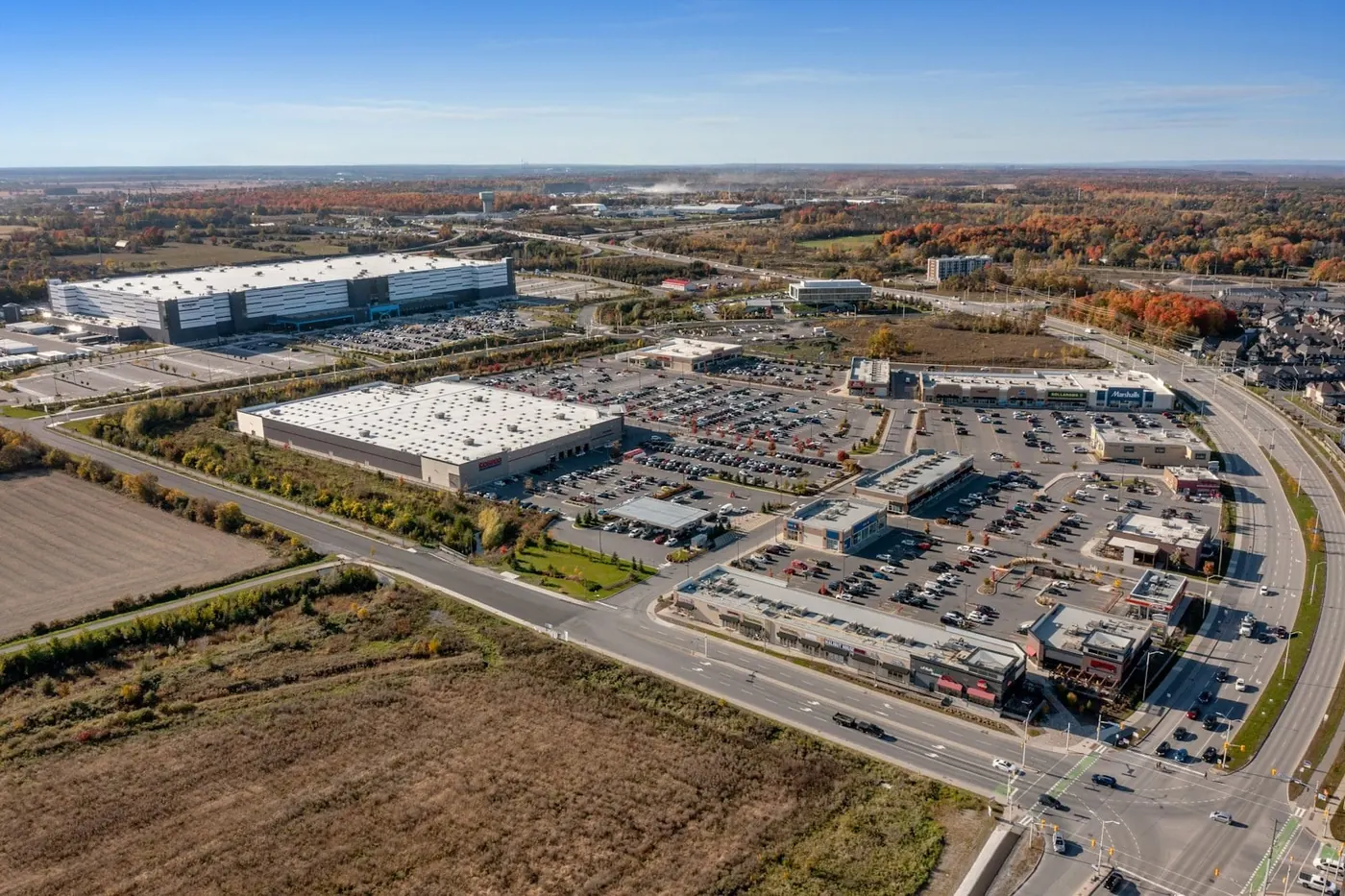
Why does roof maintenance change from one industry to the next?
Roof maintenance changes with 3 things the building type controls: what sits under the roof, when crews are allowed to work, and who signs off on the money.
| Industry | What a leak threatens | When work can happen | Who approves spending |
|---|---|---|---|
| Warehouse and distribution | Racked inventory and conveyors | Around shifts and dock schedules | Owner or asset manager |
| Retail and shopping centers | Tenant stock and sales floor | Before opening or after closing | Landlord, sometimes shared with tenants |
| Schools and districts | Classrooms and instruction days | Summer and school breaks | School board, through a bid |
| Industrial and manufacturing | Production lines and process equipment | Without a shutdown, in phases | Plant manager and corporate capital |
| Medical and office | Clinical rooms, servers and tenants | Planned with facilities and infection control | Facilities director or property manager |
| Government and municipal | Public services and records | Set by procurement and fiscal year | Council or agency, through procurement |
None of those differences changes how a roof fails. Water still enters at seams, flashings, drains and penetrations, and it still spreads through the insulation before anyone sees it. What changes is the cost of a leak, the calendar for fixing it and the paperwork needed to pay for the fix. Each industry page below explains those differences for 1 building type.
What stays the same on every building type we inspect?
Every building gets the same 4 core deliverables from 1 non-destructive scan: a Moisture Map, a Deficiency Map, a Roof Condition Score and an Estimated Remaining Service Life.
- Moisture Map: every wet area under the membrane, measured in square feet.
- Deficiency Map: every surface defect, located and photographed.
- Roof Condition Score: 0 to 100, comparable across buildings of any type.
- Estimated Remaining Service Life: years left before replacement, in budget-ready form.
- Immediate Repairs, 1-3 Year Recommendations and a Capital Planning Recommendation, each priced.
A licensed Professional Engineer signs every report. That matters more for some buyers than others: a school board or city council often needs a stamped document before it will approve a bid, while a warehouse owner may simply want a number to compare against a lease term. The report is the same; the reader is different. The scan method is explained on commercial roof inspections.
How long does a roof scan take on different building types?
Our scan covers about 50,000 square feet an hour, so a 20,000 square foot medical office takes under 30 minutes and a 500,000 square foot distribution center takes about 10 hours.
Building sizes are examples. Actual time depends on access, rooftop equipment density and roof sections.
The scan is quiet, cuts nothing and needs no interior access, which is why it fits around a hospital surgery schedule or a retail opening hour as easily as an empty warehouse. Dense mechanical equipment slows the pace somewhat, and many separate roof sections add setup time between them.
How do public agencies buy roof work differently from private owners?
Public agencies in California buy roof work through 2 layers of rules that private owners skip: competitive procurement and state prevailing wage law for public works.
A private owner can call a roofer on Monday and sign on Tuesday. A school district or city usually cannot. Work above set dollar thresholds goes out to bid, contractors must be registered with the Department of Industrial Relations to work on public projects, and workers are paid prevailing wage. Approvals follow board or council calendars, and money comes from a budget adopted for a fiscal year that runs July 1 to June 30.
The practical result is lead time. A roof problem found in March may not be funded until the next fiscal year, so a scan that documents condition and remaining life a year or more ahead is what lets an agency plan instead of react. Details for each sector are on the schools and districts and government and municipal pages.
What extra care do occupied buildings need during roof work?
Occupied buildings need 4 protections during roof work: noise limits, odor control at air intakes, dust and debris control, and a schedule that keeps crews away from sensitive rooms.
- Noise: tear-off and fastening are loud, so work over conference rooms, clinics and classrooms is timed around use.
- Odor: adhesives, primers and torch work can be pulled into rooftop air intakes unless units are shut down or intakes are covered.
- Dust and debris: ceiling spaces stay protected when deck work is planned, especially above clinical or clean areas.
- Access: crews use exterior hoists and ladders where possible, keeping material out of lobbies and corridors.
- Communication: tenants and staff get notice of work days so nobody is surprised by noise overhead.
How should an owner with several building types plan roof spending?
An owner with mixed building types should rank every roof on 1 shared scale, the 0 to 100 Roof Condition Score, and then weigh that rank by what each building protects.
Scan every roof
One method across warehouses, retail and offices makes the scores comparable.
Rank by condition
Sort the portfolio by Roof Condition Score and Estimated Remaining Service Life.
Weigh by consequence
A score of 60 over a data center is more urgent than a score of 60 over bulk storage.
Build the budget
Turn the ranked list into Immediate Repairs, 1-3 Year Recommendations and capital years.
Portfolio-level planning is covered on roof asset management, and ongoing care is priced through our maintenance programs.
Which roof systems do we see most in each industry?
Across the 6 industries we serve, single-ply TPO and PVC, modified bitumen, built-up and spray foam account for nearly every flat and low-slope roof we scan.
Large distribution buildings lean toward mechanically attached single-ply because it installs fast over big spans. Restaurants inside shopping centers push owners toward PVC near kitchen exhaust. Older schools and civic buildings often still carry built-up roofs with gravel surfaces, sometimes recovered once already. Plants with chemical fallout need membranes chosen for what lands on them. Spray foam shows up across all 6 types where owners wanted added insulation or a seamless surface around crowded equipment. Each system ages differently, and the scan reads all of them the same way, from membrane to deck.
Industries we serve
FAQs
What industries do you serve?
Warehouse and distribution, retail and shopping centers, schools and districts, industrial and manufacturing, medical and office, and government and municipal buildings.
Do you inspect roofs on occupied buildings?
Yes. The scan is quiet, needs no interior access and cuts nothing, so operations continue.
Do you bid public school and government work?
Yes. We are licensed in California and familiar with public bidding and prevailing wage requirements.
Is the report the same for every industry?
The core deliverables are the same. The recommendations reflect how your building operates.
Who signs the report?
A licensed Professional Engineer signs and stamps every report.
Can you schedule work outside business hours?
Yes. Scans and many repairs can be done early, late or on weekends where access allows.
Do you work on sloped roofs?
No. We work only on commercial flat and low-slope roofs.
How fast is the report delivered?
Within 48 hours of the scan.
Can one program cover buildings of different types?
Yes. One program can cover a warehouse, a retail center and an office under the same reporting.
Do you handle roofs with heavy rooftop equipment?
Yes. Dense mechanical areas take a little longer to scan but are fully covered.
What roof types do you work on?
TPO, PVC, EPDM, modified bitumen, built-up and spray foam.
How do I start?
Request a roof scan or call (310) 647-7192.
See what your roof is protecting, and how long it can keep doing it.
Trusted since 1983 on over 20,000 commercial roofs. California License 435836.