Estimated Remaining Service Life
How Many Years Are Left on Your Roof
Estimated Remaining Service Life, or ERSL, is a modeled figure, in years, for how long the existing roof has before it needs replacing.
It is the number that turns a roof from a surprise expense into a line in the capital plan.
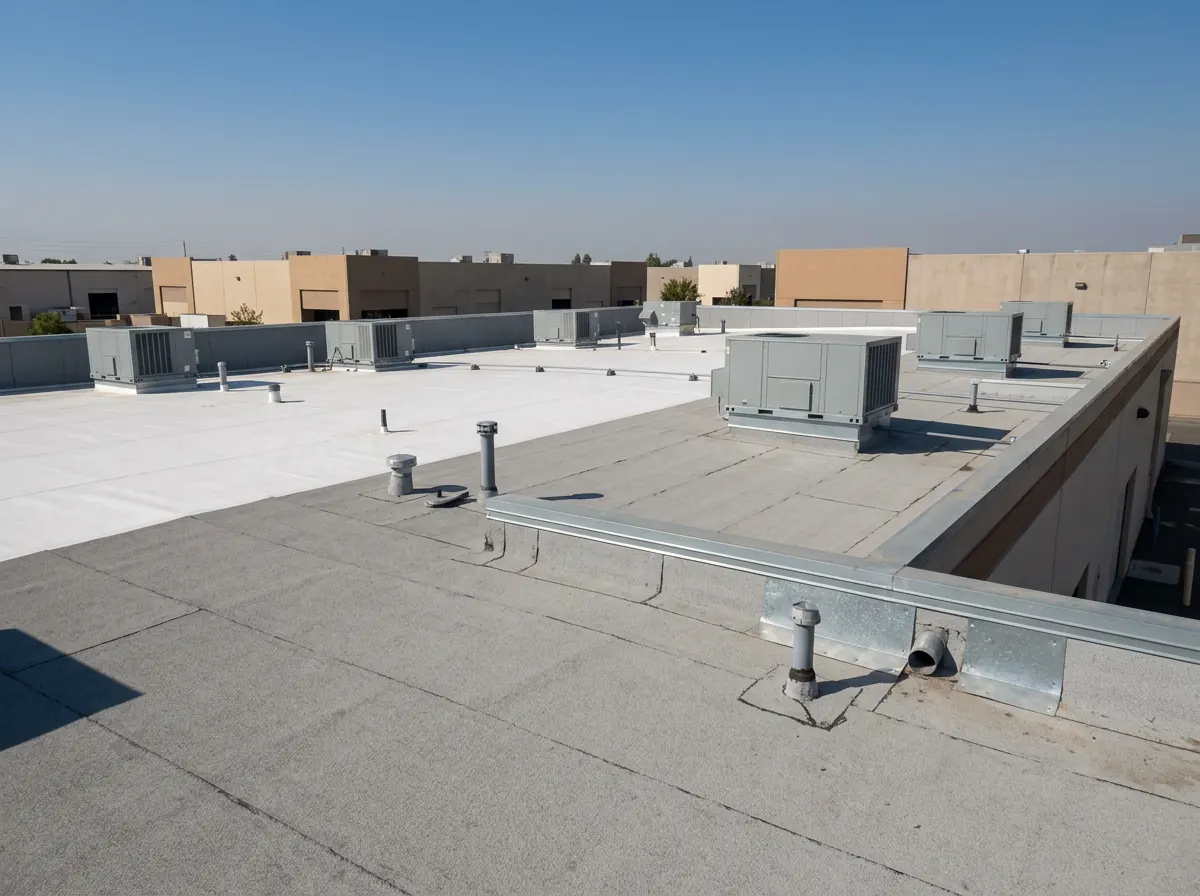
What is Estimated Remaining Service Life?
Estimated Remaining Service Life is the number of years a commercial roof can be expected to keep performing, with appropriate maintenance, before replacement becomes the sound financial choice.
General roof life expectancy figures for commercial systems describe averages across many roofs. ERSL describes yours: this membrane, on this building, in the condition we measured.
That difference matters to a CFO. Two roofs installed in the same year can have very different amounts of life left, depending on drainage, rooftop traffic, repairs and how much water is trapped inside.
It also matters outside the finance team. Asset managers use it in hold and sell decisions, buyers ask for it during due diligence, and lenders want to know whether a large roof expense sits inside the loan term.
- It is stated in years, so it drops straight into a budget.
- It appears in every report we deliver, next to the Roof Condition Score.
- It is updated at each inspection as the roof changes.
How is Remaining Service Life calculated?
Remaining service life is calculated by combining the roof system type and age with the condition our inspection measures, including the extent of trapped moisture, the number and severity of deficiencies, and the state of drainage, flashings and the membrane.
Start with the system
Each roof system has a typical service range. That is the starting point, not the answer.
Measure the actual condition
Our scan and inspection record moisture, deficiencies and wear across the whole roof.
Adjust for what was found
Trapped moisture, poor drainage and failing details shorten the estimate. Sound, well-kept roofs hold it.
Engineer review
A licensed Professional Engineer reviews the result before the report is stamped.
ERSL works alongside the Roof Condition Score. The score tells you where the roof stands today. ERSL tells you how long it can stay there.
How accurate is the estimate?
The estimate is a professional, modeled projection based on measured condition, and it is most reliable when it is updated at each inspection, because storms, repairs and maintenance all change the roof in ways no single estimate can predict.
No one can promise the exact year a roof will need replacing. What ERSL provides is a defensible planning figure, grounded in data rather than age alone, that tightens with every inspection.
Three things make the estimate stronger: a full Moisture Map rather than a few test spots, a known installation date and repair history, and a series of inspections that shows how fast the roof is actually changing. Owners who send prior reports and warranties with their request give us all three.
- Treat ERSL as a planning horizon, not a guarantee.
- Re-inspect twice a year so the estimate follows the roof.
- Expect the estimate to lengthen after significant repairs or restoration.
- Expect it to shorten after storm damage or rooftop work that was not repaired.
How do you budget from Remaining Service Life?
You budget from Remaining Service Life by dividing the expected replacement cost across the years left, so the roof is funded in equal annual amounts instead of arriving as one unplanned expense.
If a roof has five years left, setting aside 20 percent of the replacement cost each year funds it fully by the time it is needed. A roof that fails without warning puts 100 percent of the cost into a single year, often with interior damage on top.
Illustration using a five-year Remaining Service Life. Unplanned failures can add interior damage and emergency costs beyond the replacement itself.
| Factor | Planned from ERSL | Unplanned failure |
|---|---|---|
| Timing | Chosen by the owner | Chosen by the roof |
| Budget impact | Spread across the remaining years | All in one year |
| Bidding | Competitive, on a defined scope | Rushed, under pressure |
| Tenant impact | Scheduled around operations | Leaks and disruption first |
| Interior damage | Avoided | Likely |
Across a portfolio, the same method staggers replacements so they do not all land in the same year. A building with three years left and another with eight can be funded side by side, each on its own schedule, which keeps annual capital spending steady.
The plan also protects the roof you are paying for. Budgeted maintenance in the years before replacement keeps the roof watertight until the planned date, rather than forcing the project early.
For owners with more than one building, see how ERSL feeds a roof capital plan.
What shortens a commercial roof's remaining life?
A commercial roof's remaining life is shortened most by trapped moisture, ponding water, unrepaired deficiencies, heavy rooftop traffic and damage from other trades, and deferred maintenance that lets small problems grow.
- Trapped moisture: wet insulation spreads and degrades the assembly from within.
- Ponding: standing water accelerates membrane wear and stresses seams.
- Open deficiencies: a failed flashing left for a season becomes a wet area.
- Rooftop traffic: service calls and equipment work puncture and scuff the membrane.
- Heat and sun: ultraviolet exposure ages membranes and coatings, especially without upkeep.
Climate plays a part as well. Long, hot, dry summers age exposed membranes and coatings, and the first heavy rains of the season test every seam and drain the summer weakened. A roof that is inspected and repaired on that cycle ages more slowly than one that is only visited when it leaks.
Most of these can be controlled. Twice a year inspection, prompt repair and clear drainage are what keep ERSL from shrinking faster than the calendar.
More on commercial roof inspections
What else do owners ask about roof life expectancy?
How many years are left on my roof?
Only an inspection of your roof can say. Our report gives an Estimated Remaining Service Life in years, based on measured condition.
What is the average commercial roof life expectancy?
It varies widely by system, installation, climate and maintenance. ERSL replaces the average with a figure for your specific roof.
Is ERSL the same as roof age?
No. Age is how long the roof has been in place. ERSL is how long it has left, based on its condition.
Can maintenance extend Remaining Service Life?
Yes. Prompt repairs, clear drainage and replacing wet insulation can hold or lengthen the estimate.
Can restoration add years?
Often, on a roof that is dry and structurally sound. A moisture survey confirms whether restoration is appropriate.
How often is ERSL updated?
At every inspection, ideally twice a year.
Can we use ERSL in a capital budget?
Yes. It is designed for that. Divide the expected replacement cost across the remaining years.
Is the estimate guaranteed?
No. It is a professional, modeled projection. Storms and changes to the roof can shorten or lengthen it.
Who produces the estimate?
It comes from our inspection data, reviewed by a licensed Professional Engineer who stamps the report.
Can we share ERSL with a lender or buyer?
Yes. Owners share the report in financing, sales and asset reviews. We cannot guarantee how any party will use it.
What if ERSL is zero?
The roof should be scheduled for replacement, with leak control and interim repairs until the work is done.
Find out how many years are left on your roof.
Trusted since 1983 on over 20,000 commercial roofs. California License 435836.