Commercial roof inspection frequency
How Often Should a Commercial Roof Be Inspected?
A commercial roof should be inspected twice a year, in spring and fall, plus after any major storm.
That schedule is what insurance loss prevention teams and roof manufacturers recommend, and it is the rhythm that catches small problems while they are still small.
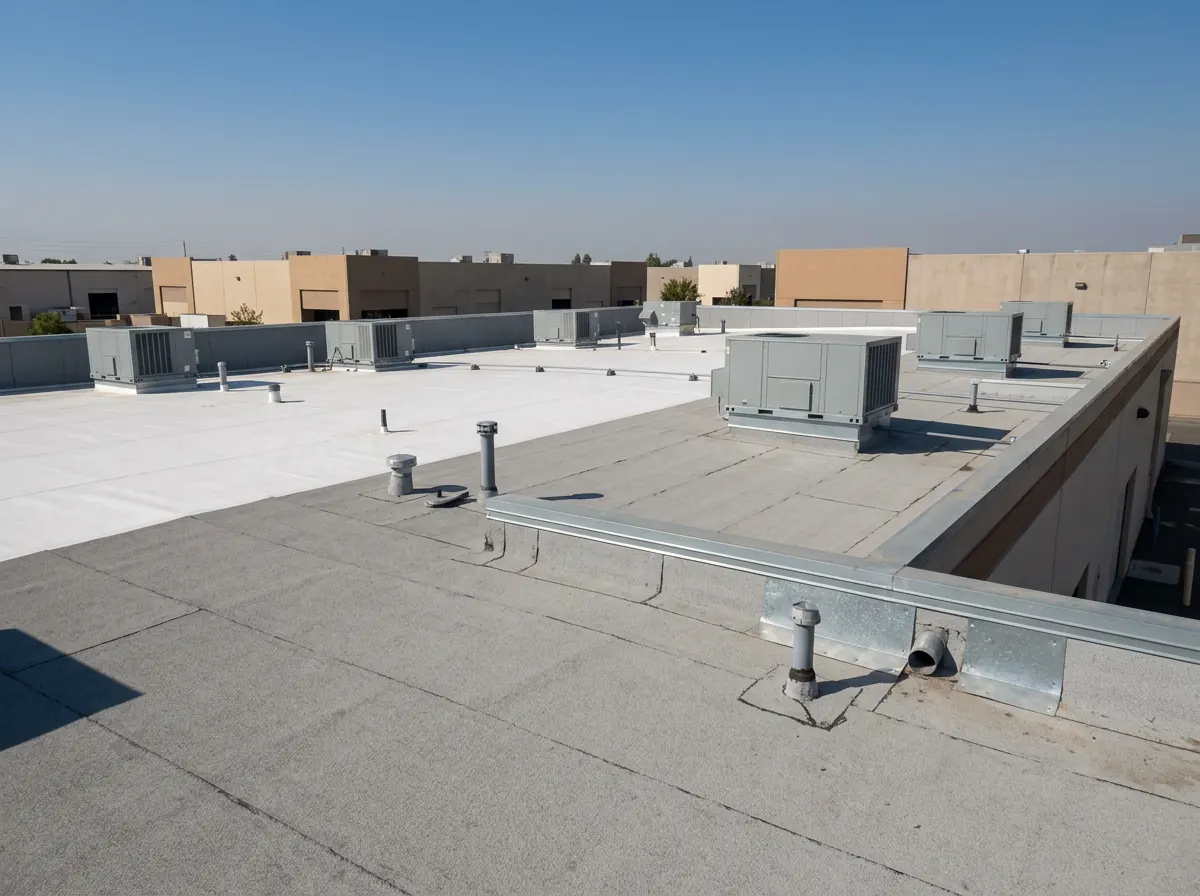
How often should a commercial roof be inspected?
A commercial roof should be inspected at least twice a year, once in spring and once in fall, with an additional inspection after any major storm, rooftop construction or equipment work.
Two inspections a year is the baseline, not the ceiling. A roof with heavy foot traffic, lots of rooftop equipment, or a history of leaks may justify more frequent checks of the high-risk areas.
Scheduled inspections fall in spring and fall. Event-driven inspections are added as they occur.
- Spring: find the damage the rainy season caused.
- Fall: prepare the roof before the rain returns.
- After storms: confirm there is no new damage or blocked drainage.
- After rooftop work: check that trades did not damage the membrane or flashings.
Why spring and fall?
Spring and fall bracket the rainy season, so the fall inspection prepares the roof for rain and the spring inspection finds the damage the wet months caused before summer heat makes it worse.
In Southern California, most rain arrives between late fall and early spring. Drains clogged with a summer of dust and debris, seams opened by heat, and flashings loosened by wind all become leaks once the rain starts.
A fall visit clears the drainage path and seals the openings. A spring visit catches whatever the storms found. Between the two, summer heat and ultraviolet exposure work on the membrane, which is why neither visit should be skipped.
Timing also helps with scheduling repairs. Work found in spring can be completed through the dry summer months, and work found in early fall can be finished before the first storm, when roofing crews are busiest.
When should you inspect after a storm?
You should inspect after a storm as soon as the roof is dry and safe to walk, ideally within a few days, and immediately if there is an active leak, standing water that is not draining, or visible wind damage.
Storm damage is easiest to document, and to claim, when it is recorded promptly. Look for these signs from the ground or a safe vantage point, and call us rather than walking a damaged roof.
- Water that is still standing on the roof well after the rain has stopped.
- Debris, branches or loose equipment panels on the roof.
- Lifted membrane edges, torn flashings or displaced coping.
- New stains on ceiling tiles or water at the top floor.
Post-storm inspection is included in our Protect and Manage programs. See the maintenance programs for details.
What do insurers recommend?
Travelers Risk Control and Chubb Risk Consulting both recommend a regular inspection program for commercial roofs, performed twice a year and documented, with Travelers also calling for inspection after major storms or construction activity.
| Source | Recommended frequency | Documentation |
|---|---|---|
| Travelers Risk Control | A regular program, semi-annual, plus after major storms or construction activity. | Systematic documentation of each inspection. |
| Chubb Risk Consulting | Regular inspections, generally twice a year. | Documented inspections, with routine maintenance under a service agreement with the roof installer. |
Insurers care because roof failures drive property claims. A documented history of inspection and repair shows an underwriter that the roof is being managed. How roof data is used at quote and renewal is covered in roof risk management.
What do roof warranties require?
Most commercial roof warranties require or recommend routine inspection, prompt repair of deficiencies, control over rooftop alterations, and maintenance records kept by the building owner, and several manufacturers name twice-yearly inspection specifically.
A manufacturer warranty covers defects in materials or workmanship. It usually does not cover damage caused by neglect, unapproved rooftop work or unrepaired deficiencies. That makes the inspection record the owner's proof that the roof was cared for.
- Keep every inspection report and repair invoice together.
- Photograph rooftop work by other trades before and after.
- Repair reported deficiencies promptly and record the date.
- Read your issued warranty. The project-specific document always controls.
Manufacturer by manufacturer requirements are compared in roof warranty management.
More on commercial roof inspections
What else do owners ask about commercial roof inspection frequency?
Is once a year enough?
Once a year is better than nothing, but insurers and manufacturers recommend twice a year. A single annual visit leaves a full season of weather unchecked.
Does a new roof need inspection?
Yes. New roofs can be damaged by other trades and can have installation issues that show up in the first year. Early records also protect the warranty.
What counts as a major storm?
Any event with heavy rain, high wind or hail, or one that leaves debris or standing water on the roof.
Should we inspect after HVAC or solar work?
Yes. Rooftop work is a common cause of punctures and damaged flashings, and many warranties require control of rooftop alterations.
Who can perform the inspection?
Building staff can do basic visual checks. A professional inspection with documentation is what insurers and warranties expect.
Can a program handle the schedule for us?
Yes. Our Protect and Manage programs include two inspections a year plus post-storm inspection.
Do insurers require roof inspections?
Travelers and Chubb recommend semi-annual inspection with documentation. Requirements vary by carrier and policy, so check with your broker.
How long should we keep inspection records?
For the life of the roof and its warranty, and through any sale of the building.
Does inspection frequency change with roof age?
Older roofs benefit from closer attention to high-risk areas, but the twice a year baseline applies to every roof.
When is the best time to book the fall inspection?
Early fall, before the first rain, so any repairs can be completed while the roof is dry.
Put your roof on a twice a year inspection schedule.
Trusted since 1983 on over 20,000 commercial roofs. California License 435836.