Roof Condition Score
What a Roof Condition Score Tells You
A Roof Condition Score is a 0 to 100 rating of a roof's current condition that lets every building in a portfolio be ranked against every other.
It turns a roof assessment into one number an owner, an asset manager and a CFO can all read the same way.
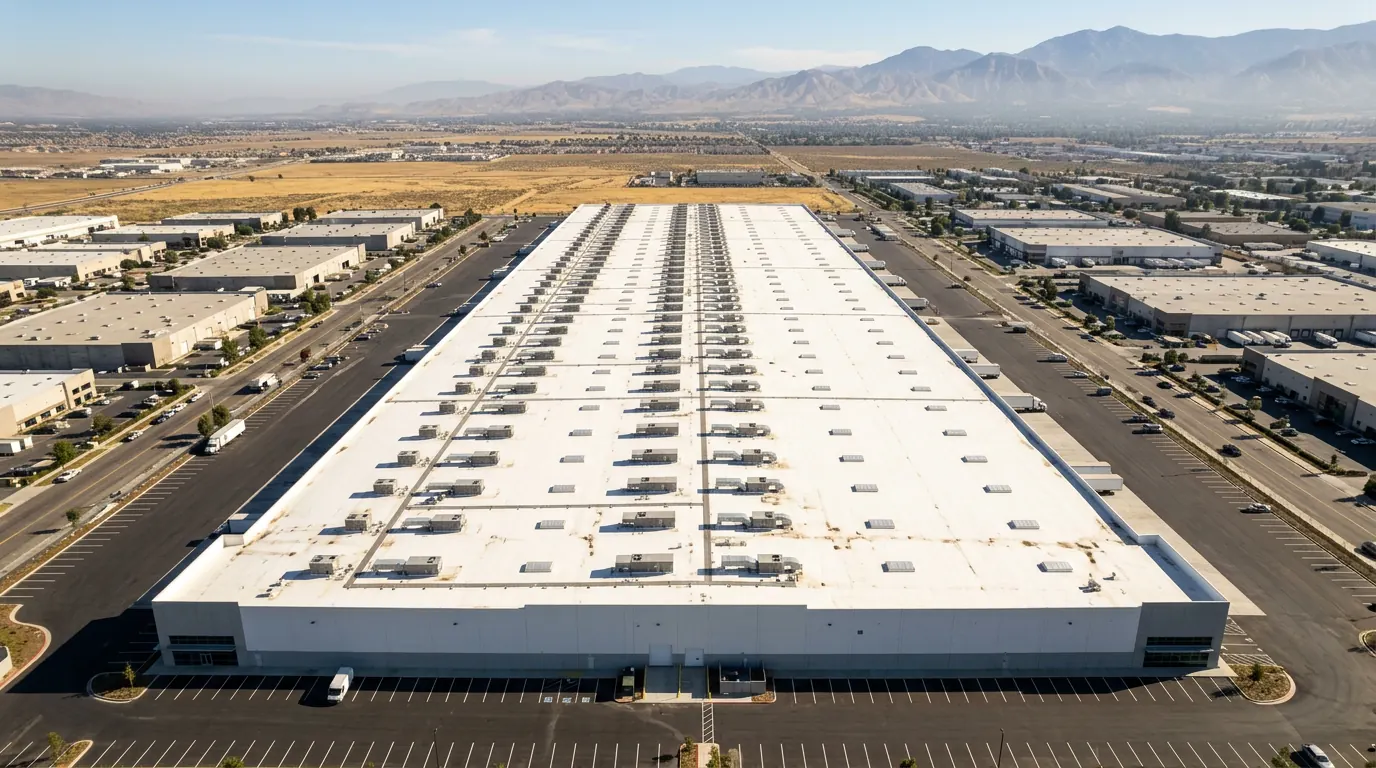
What is a Roof Condition Score?
A Roof Condition Score is a single number from 0 to 100 that summarizes the current condition of a commercial roof, where 100 is a roof in excellent condition and 0 is a roof that has failed.
Terms like roof condition index and roof condition rating describe the same idea: a standard scale that replaces descriptions such as fair or aging. A score makes roofs comparable across buildings, years and inspectors.
- It is part of every report we deliver, alongside the moisture and Deficiency Maps.
- It describes condition today. Remaining service life describes the years ahead.
- It is calculated the same way on every roof, so rankings are fair.
How is the score calculated?
The score is calculated from what our roof condition assessment records: the extent of trapped moisture, the number and severity of deficiencies, the condition of drains, flashings, seams and penetrations, and the overall state of the membrane.
Moisture carries heavy weight, because wet insulation is the finding most likely to force a larger repair. A roof with a clean surface but significant trapped water will score lower than its appearance suggests.
- Moisture: how much of the roof area is wet, from our moisture survey.
- Deficiencies: how many defects were recorded, and how serious each is.
- Critical details: the state of drains, flashings, seams, curbs and penetrations.
- Membrane: surface wear, cracking, blistering or coating loss.
A licensed Professional Engineer reviews the findings behind every score before the report is stamped.
What does a score of 60 mean versus 85?
A score of 85 means a roof in good condition that needs preventative maintenance and minor repairs, while a score of 60 means a roof in fair condition that needs targeted repairs now and should be evaluated for restoration.
The chart shows the five bands on our scale and the action each band implies.
Bands on our scale. Every roof is also evaluated individually in the report.
| Score band | Condition | Recommended action |
|---|---|---|
| 86 to 100 | Excellent | Routine maintenance and scheduled inspections. |
| 71 to 85 | Good | Preventative maintenance and minor repairs. |
| 56 to 70 | Fair | Targeted repairs now, and evaluate restoration. |
| 41 to 55 | Poor | Major repair or restoration, budgeted within 1 to 3 years. |
| 0 to 40 | Critical | Plan replacement and control leaks in the meantime. |
A drop from 85 toward 60 often reflects maintenance that has been put off. Moving a roof back up the scale is almost always cheaper than letting it fall into the lower bands.
How do you use a Roof Condition Score across a portfolio?
Across a portfolio, you use the Roof Condition Score to rank every building from worst to best, so the lowest-scoring roofs get attention and budget first and the healthiest roofs stay on routine maintenance.
Paired with Remaining Service Life, the score shows both urgency and timing. A low score with several years left calls for repair. A low score with little life left calls for a replacement budget.
- Sort buildings by score to set the order of spending.
- Group roofs in the same band to bid repairs together.
- Track the portfolio average year over year as a measure of program results.
How owners manage many roofs at once is covered in multi-building roof management.
How often does the score change?
The score changes whenever the roof is inspected and its condition has moved, which is why it is recalculated at every inspection, typically once or twice a year, and after repairs or storm damage.
Maintained roofs tend to hold their score or decline slowly. Repairs and restoration can raise it. A storm, a failed flashing or rooftop work by another trade can lower it quickly, which is why post-storm inspection matters.
Watching the trend is as useful as reading the number. A roof that drops several points between two inspections is telling you something changed, even if the score is still in a healthy band. The report shows where, so the cause can be fixed before the next season.
- Compare each new score with the last one, not only with the bands.
- Ask what drove any drop: moisture, new deficiencies or wear.
- Confirm that completed repairs show up as a higher score at the next visit.
More on commercial roof inspections
What else do owners ask about roof condition ratings?
Is a Roof Condition Score the same as a roof condition index?
They describe the same idea: a standard numeric scale for roof condition. Ours runs from 0 to 100.
What is a good Roof Condition Score?
On our scale, 71 to 85 is good and 86 to 100 is excellent.
What score means we need a new roof?
Scores of 40 and below indicate planning for replacement, confirmed by the Remaining Service Life estimate.
Can a roof score go up?
Yes. Repairs, wet insulation replacement and restoration can all raise the score at the next inspection.
Does roof age decide the score?
No. The score reflects measured condition. A well-kept older roof can outscore a neglected newer one.
Who calculates the score?
It comes from our roof condition assessment, and a licensed Professional Engineer reviews the findings and stamps the report.
Can we compare scores from different roof types?
Yes. The scale describes condition, not material, so TPO, foam and built-up roofs can be ranked together.
How is the score different from Remaining Service Life?
The score describes condition today. Remaining service life estimates the years left before replacement.
Can we share the score with a lender or insurer?
Yes. It is part of the report owners share as a professional record. We cannot guarantee how any party will use it.
How often should the score be updated?
At every inspection, ideally twice a year, and after major storms.
Get a Roof Condition Score for every building you own.
Trusted since 1983 on over 20,000 commercial roofs. California License 435836.