Torch down and built-up roofing
Modified Bitumen Roofing Contractor for Commercial Flat Roofs
Modified bitumen is a 2 or 3 ply roof of polymer-modified bitumen sheets, applied by torch, cold adhesive or self-adhered laps, and it descends directly from the built-up roofs still found on many older commercial buildings.
We repair, restore and replace modified bitumen and built-up roofs on flat and low-slope commercial buildings.
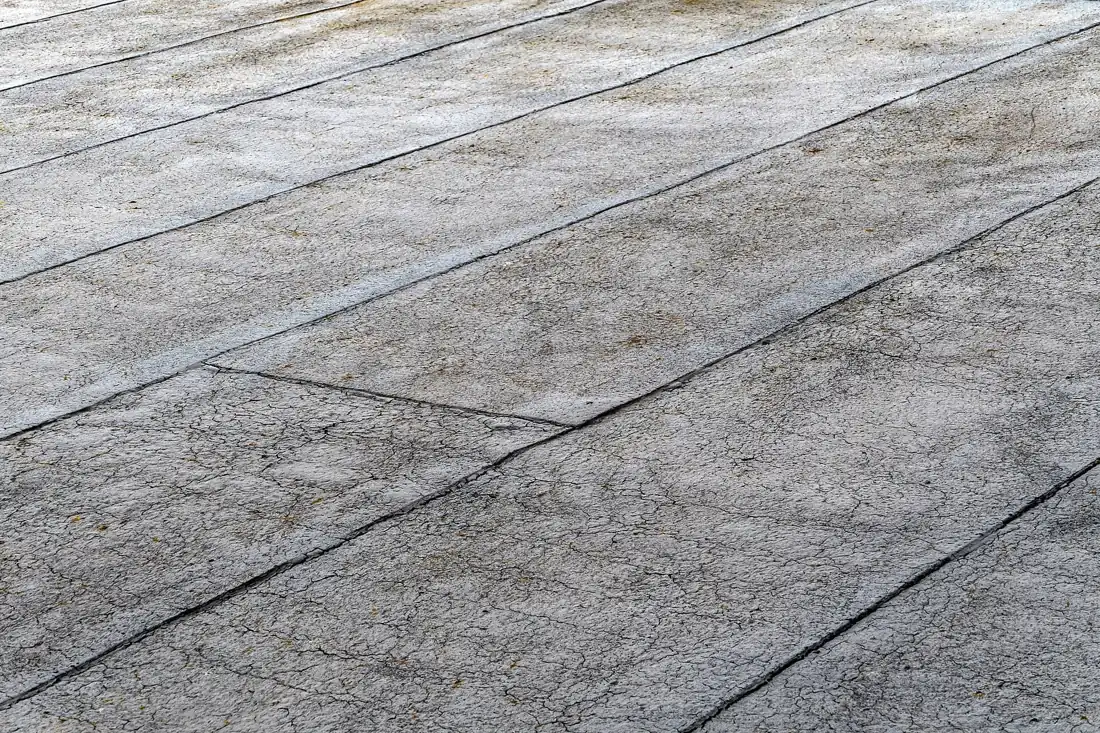
How do torch down, cold adhesive and self-adhered modified bitumen differ?
The 3 application methods differ in how laps are bonded, which changes fire risk on the roof, odor inside the building and how well the seams hold up.
| Factor | Torch applied | Cold adhesive | Self-adhered | Built-up (BUR) |
|---|---|---|---|---|
| How laps bond | Open flame melts the back of the sheet | Solvent or water-based adhesive | Factory adhesive under a release film | Hot or cold bitumen between felts |
| Open flame on roof | Yes, fire watch required | No | No | Hot kettle on some systems |
| Odor in occupied space | Low to moderate | Moderate while curing | Low | High with hot bitumen |
| Seam reliability | High when done well | Depends on cure weather | Depends on surface prep and temperature | High, many plies |
| Common use today | Many reroofs | Flame-sensitive sites | Occupied buildings, small sections | Older buildings, repairs |
Why does a modified bitumen roof lose granules?
Granules shed over 10 to 20 years of sun, foot traffic and water flow, and once the bitumen underneath is exposed, UV dries and cracks it far faster.
- Bare patches along walkways and around rooftop units, where foot traffic wears the cap sheet.
- Granules collected in drains and gutters, a sign the surface is wearing evenly.
- Alligator cracking on exposed bitumen, the stage where restoration windows start to close.
- A reflective coating can replace lost granules if the assembly beneath is dry.
What causes blisters on modified bitumen and built-up roofs?
Blisters form when 1 pocket of trapped air or moisture between plies expands in heat, lifting the sheet and stretching it until it cracks.
Map
Our scan shows whether a blister sits over wet insulation or a dry, isolated void.
Leave or cut
Small dry blisters are often left alone and monitored. Cracked or growing ones are cut out.
Patch
The opened area is dried, primed and patched with matching plies.
Track
Blister locations are logged so the next survey shows if they are spreading.
Where do modified bitumen roofs usually leak?
Most modified bitumen leaks start at 4 places: lap seams, base flashings at walls, penetrations, and low spots where water ponds against the laps.
Torch-applied laps can be underheated during installation, leaving a seam that looks sealed but lets water wick in. Built-up roofs tend to leak at flashings and at cracks in the top pour. Both hold water inside the plies, so the leak inside the building often appears well away from the opening.
How long does a modified bitumen roof typically last?
Modified bitumen is commonly cited at 15 to 25 years and built-up roofs at 20 to 30 years, with a granulated or coated surface and good drainage pushing toward the top of each range.
Ranges are general and vary with installation, climate and maintenance. Your report estimates the remaining life of your roof.
Our scan reads moisture held between plies without cutting the roof; see commercial roof inspections. Small leaks are handled through commercial roof repair.
FAQs
What is modified bitumen roofing?
Bitumen sheets modified with polymers such as SBS or APP, installed in 2 or 3 plies on flat and low-slope roofs.
Is torch down roofing safe on an occupied building?
Yes, with a fire watch and safe-torch practices. Cold or self-adhered sheets are used where flame is not allowed.
What is the difference between modified bitumen and built-up roofing?
Built-up roofs layer felts and bitumen on site. Modified bitumen uses factory-made sheets with polymers for flexibility.
Do you repair built-up roofs?
Yes: flashings, cracks, blisters and penetrations.
Should I worry about blisters?
Small dry blisters are often monitored. Cracked or spreading ones need repair.
Can modified bitumen be coated?
Yes, once the roof is dry and laps are sound. Coating replaces lost granules.
What is SBS versus APP?
SBS is rubber-modified and often cold or torch applied. APP is plastic-modified and usually torched.
Why does my roof leak far from the stain?
Water travels between plies before it finds a way through the deck.
Can a new roof go over a built-up roof?
Sometimes, if it is dry and code allows 1 recover layer.
How do you find wet areas under the plies?
Our scan maps trapped moisture across the whole roof without core cuts.
How do I reach a modified bitumen roofing contractor?
Request a roof scan or call (310) 647-7192.
Find out what is happening between the plies of your roof.
Trusted since 1983 on over 20,000 commercial roofs. California License 435836.