Northern California
Commercial Roof Inspection and Maintenance in San Francisco, CA
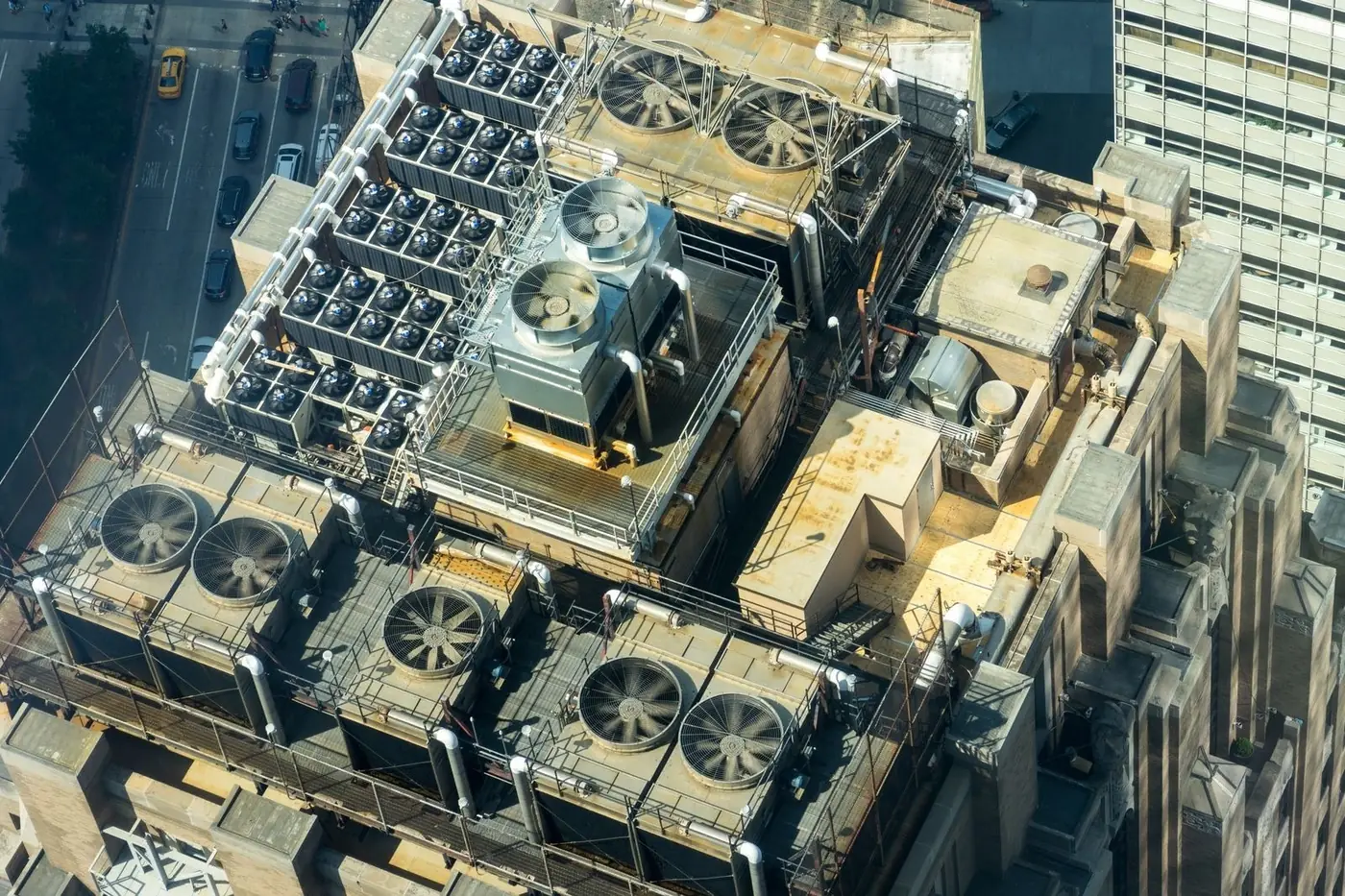
San Francisco packs offices, warehouses, hotels and storefronts into 47 square miles, so most commercial roofs in the city are small, crowded with equipment and surrounded by neighboring buildings.
What kinds of commercial buildings are in San Francisco?
San Francisco's commercial roofs fall into 4 main groups: office towers and mid-rise buildings downtown, converted warehouses and light industrial buildings in SoMa and Dogpatch, industrial and distribution buildings in the Bayview, and older mixed-use storefront buildings in the neighborhoods.
Many roofs were built before 1940 and have been recovered more than once. Rooftop decks, cell antennas, solar panels and mechanical equipment often share the same small roof.
- Financial District and downtown: office towers and mid-rise commercial buildings with crowded roofs
- SoMa: converted warehouses, offices and light industrial buildings
- Dogpatch and Potrero Hill: brick industrial buildings, studios and newer research space
- Bayview and India Basin: distribution, food and industrial buildings near the southern waterfront
| Building type | Common roof system | Typical age | What San Francisco does to it |
|---|---|---|---|
| Mid-rise office and hotel | Modified bitumen or built-up roof | 15 to 50 years old | Crowded equipment, antennas and roof decks |
| Converted brick warehouses | Built-up roof with multiple recovers | 40 to 100 years old | Trapped water between old layers |
| Bayview industrial | Built-up roof or TPO | 20 to 50 years old | Salt air and wind off the bay |
What does the San Francisco climate do to a flat roof?
San Francisco gives a flat roof about 23 inches of rain a year and frequent summer fog, so roofs in the western and central neighborhoods can stay damp for days at a time.
Salt air from the ocean and the bay works on metal flashings, fasteners and drains. Strong afternoon wind lifts loose edges, and winter storms often arrive with driving rain that tests parapets and wall flashings.
How often should commercial roofs in San Francisco be inspected?
A San Francisco commercial roof should be inspected 2 times a year, plus once after any major winter storm.
Older brick buildings with recovered roofs should also get a Moisture Map at least every 2 years, because water trapped between layers rarely shows up as an interior leak until damage is advanced. Our commercial roof inspection page explains what each visit covers.
What does a maintenance program cost in San Francisco?
A maintenance program for a 25,000 square foot mid-rise commercial building in San Francisco costs $5,500 to $6,250 a year on our Protect program, priced at $0.22 to $0.25 per square foot with a $2,500 minimum.
Protect fits most San Francisco roofs because storm checks and repair tracking matter on small, crowded roofs that take driving rain. Compare all 3 tiers for San Francisco on the maintenance programs and pricing page.
San Francisco figures use our published rates: Monitor $0.12 to $0.15 per square foot a year with a $1,500 annual minimum, Protect $0.22 to $0.25 per square foot a year with a $2,500 annual minimum, Manage $0.40 to $0.45 per square foot a year with a $4,500 annual minimum.
How soon can you scan a roof in San Francisco?
We can scan a roof in San Francisco as soon as roof access is confirmed after your request, and a 25,000 square foot mid-rise commercial building takes under an hour at roughly 50,000 square feet an hour, with the PE-stamped report delivered within 48 hours.
San Francisco roof access is usually through an interior stair or hatch, and street parking for our crew may need a building loading zone, so we plan both with the property manager. Send the San Francisco address through our roof scan request form, or see coverage across Northern California.
FAQs
Can you scan a small San Francisco roof crowded with equipment?
We scan small San Francisco roofs crowded with equipment regularly, covering every open area between units, decks and antennas and marking those features on the Moisture Map.
Does fog make San Francisco roofs harder to scan?
Fog can leave a San Francisco roof surface wet, so we schedule the scan for a dry window, usually late morning or afternoon once the fog lifts.
Which parts of San Francisco do you cover?
We cover every flat and low-slope commercial roof in San Francisco, including Financial District and downtown, SoMa, Dogpatch and Potrero Hill and Bayview and India Basin.
How long does a roof scan take on a mid-rise commercial building in San Francisco?
A roof scan on a 25,000 square foot mid-rise commercial building in San Francisco takes under an hour, because our robotic scan covers roughly 50,000 square feet an hour, and the PE-stamped report follows within 48 hours.
What is the most common commercial roof system in San Francisco?
Modified bitumen or built-up roof is the most common roof on San Francisco's mid-rise office and hotel stock, and those roofs are typically 15 to 50 years old.
Who issues reroof permits in San Francisco?
Reroof permits in San Francisco are issued by the Department of Building Inspection, because San Francisco is a combined City and County. San Francisco roof work that uses the sidewalk or street for staging or a crane needs separate street use permits from the city on top of the building permit.
Which program fits most San Francisco roofs?
Protect fits most San Francisco roofs because storm checks and repair tracking matter on small, crowded roofs that take driving rain.
What does a Protect program cost for a mid-rise commercial building in San Francisco?
A 25,000 square foot mid-rise commercial building in San Francisco costs $5,500 to $6,250 a year on Protect, at $0.22 to $0.25 per square foot a year with a $2,500 annual minimum.
Do you need to go inside the building to scan a roof in San Francisco?
No. The scan runs on the roof surface in San Francisco, so offices, plants and tenants below carry on as normal.
How soon after the scan is the San Francisco report delivered?
San Francisco owners receive the PE-stamped report within 48 hours of the scan, with the Moisture Map, Deficiency Map, Roof Condition Score and Estimated Remaining Service Life.
Which roof systems do you scan in San Francisco?
In San Francisco we scan TPO, PVC, EPDM, modified bitumen, built-up and spray foam roofs on flat and low-slope commercial buildings.
How do I book a roof scan in San Francisco?
Send the San Francisco address through the roof scan request form or call (310) 647-7192.
Schedule a non-destructive roof scan in San Francisco.
Trusted since 1983 on over 20,000 commercial roofs. California License 435836.