Industrial and manufacturing
Industrial Roof Inspection and Maintenance for Manufacturing Plants
A production roof takes abuse from 2 directions at once: exhaust and fallout landing on the membrane from above, and process humidity condensing under the deck from below.
Our scan reads both sides of that assembly without stopping a single line.
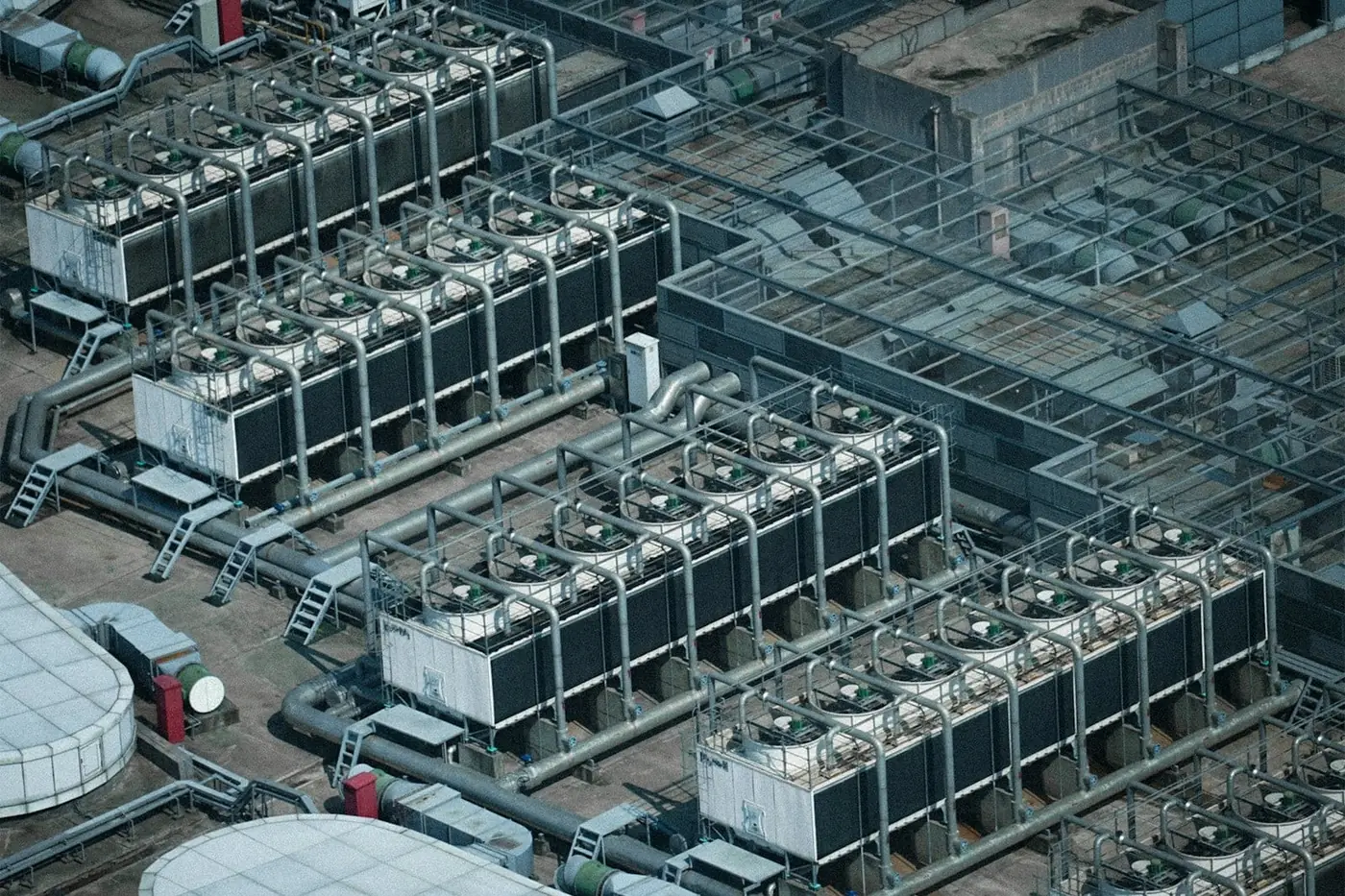
Which plant contaminants attack a commercial roof membrane?
At least 4 groups of plant contaminants attack membranes: oils and grease, solvents, acids or caustics, and abrasive dust, and each one damages a different membrane type.
| Contaminant | Common source | More resistant | More vulnerable |
|---|---|---|---|
| Animal fats and cooking grease | Food processing exhaust | PVC, KEE-based membranes | EPDM, bitumen |
| Petroleum oils and solvents | Machining, parts washing | PVC with oil-resistant formula | EPDM, bitumen |
| Acidic or caustic vapor | Plating, cleaning lines | Membrane chosen to the specific chemical | Unprotected coatings |
| Metal and mineral dust | Grinding, cutting, kilns | Granulated cap sheets, walkway pads | Thin single-ply in traffic areas |
| Heat from stacks | Ovens, furnaces, dryers | Heat-rated flashing assemblies | Membrane near uninsulated stacks |
Resistance depends on the specific chemical and concentration. Membrane manufacturers publish compatibility charts, and the right choice is confirmed against the plant's actual exhaust.
How does machine vibration damage a plant roof?
Vibration from presses, compressors and rooftop fans works on a roof 24 hours a day, backing out fasteners, cracking rigid flashings and fatiguing seams at equipment curbs.
- Fasteners that back out tent the membrane and eventually puncture it from below.
- Pitch pans and rigid counterflashing crack where equipment shakes against them.
- Seams at curbs flex thousands of times a day and open first.
- Isolation pads under rooftop units harden and stop absorbing movement.
Why does interior process humidity matter to an industrial roof?
Humidity from at least 4 common processes, washing, curing, cooking and cooling, can condense inside the roof assembly at a cold deck and wet the insulation from below with every seam intact.
Condensation-driven moisture looks like a leak inside the plant but has no hole in the membrane to find. A walk-on inspection sees a clean surface and moves on. Our scan reads moisture in the insulation regardless of where it came from, and the pattern helps separate a roof leak from a vapor problem. A vapor problem is fixed with ventilation, a vapor retarder or insulation changes, not with membrane patches.
Can roof work happen on a plant that never shuts down?
Roof work on a 24/7 plant is done in phases of 1 roof area at a time, scheduled around production, with hot work, odor and debris controlled above live lines.
Map
The scan identifies which areas need work and which can wait.
Coordinate
Phases are matched to production, maintenance windows and intake locations.
Protect
Debris and dust are controlled above sensitive processes.
Permit
Hot work follows the plant permit and fire watch rules.
Verify
Each phase is checked and documented before the next begins.
How often should a manufacturing roof be inspected?
A manufacturing roof with exhaust or vibration exposure should be inspected at least 2 times a year, and roofs near grease or chemical vents often need a quarterly check.
Example schedule only. Actual frequency follows the scan findings and the exposure at each plant.
Quarterly visits and vent cleaning fit naturally into a maintenance program, priced per square foot.
Other industries we serve
FAQs
Does the scan interrupt production?
No. The scan runs on the roof surface with no interior access and no shutdown.
Can you tell a roof leak from condensation?
Often, yes. Moisture patterns, location and the absence of a membrane defect point to a vapor source.
Which membrane handles grease best?
PVC and KEE-based membranes generally resist fats and oils better than EPDM or bitumen.
Do you clean grease from roof vents?
Vent area cleaning can be included in a maintenance program.
Can you work around hot work permits?
Yes. We follow the plant permit, fire watch and safety rules.
Do you need to enter the plant?
Usually not. Roof access through a ladder or hatch is enough for the scan.
How fast is the scan?
About 50,000 square feet an hour, with a PE-stamped report within 48 hours.
Can the report support an insurance renewal?
Yes. The report documents condition, wet areas and deficiencies under a Professional Engineer stamp.
Do you handle spray foam on plants?
Yes. Dura-Foam has applied spray foam since 1983.
What if equipment covers most of the roof?
The scan works around equipment, and the report flags areas that could not be read.
How do I request a scan for my plant?
Request a roof scan or call (310) 647-7192.
Keep the roof working as hard as the plant under it.
Trusted since 1983 on over 20,000 commercial roofs. California License 435836.